Ryan Thompson — Founder & Lead Experimenter
Electronics Experimenter · System Builder · Founder of Lightning Audio & Sound
Ryan Thompson is a lifelong electronics experimenter and system builder with decades of hands-on experience in applied electronics, audio engineering, and high-energy systems.
His interest in electronics began early. By the age of eight, Ryan was already building circuit boards and electronic equipment in his own workspace. As a high-school student, he was deeply involved in experimental electronics projects and competitive science work, earning Grand Champion honors in Electronics and Science at the Minnesota State Fair multiple times between 1988 and 1994.
In the late 1990s, Ryan founded Lightning Audio and Sound, specializing in high-performance car audio systems and custom electronics for demanding applications. During this period, he worked extensively with amplification, signal handling, power delivery, and system optimization — experience that would later inform his work with experimental energy devices.

Middle Years
Over the years, Ryan has contributed to or consulted on a range of advanced technologies, including early concepts related to remote vehicle systems, digital audio formats, and tracking technologies. His expertise led to collaborations within the automotive and entertainment industries, including work on custom audio systems for television productions such as ‘Pimp my Ride’, and participation in large-scale high-voltage demonstrations, such as a one-million-volt Tesla coil build for a televised illusion performance. He's also worked with the popular electronics company Amazing 1 (Information Unlimited) to help build many of their products.
Continuing the Work
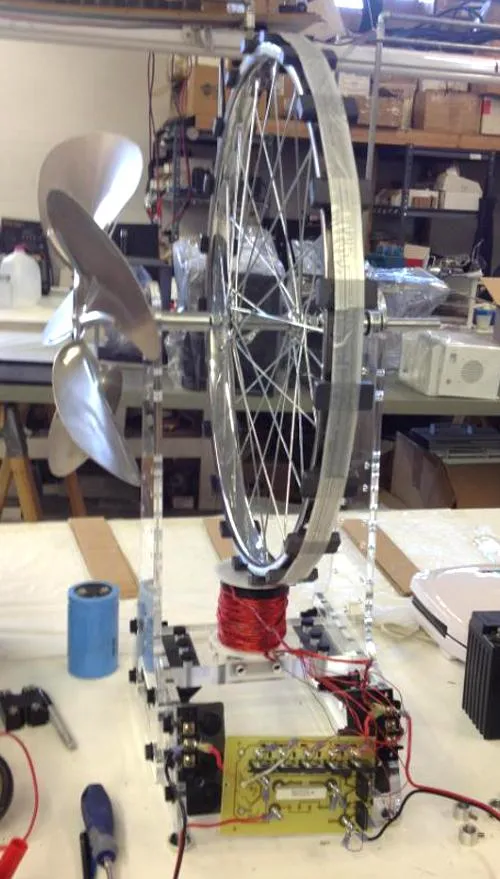
Through his background in audio engineering and high-energy systems, Ryan became familiar with John Bedini’s work long before it gained wider attention in DIY and experimental electronics circles. The two worlds — audio amplification and pulsed electromagnetic systems — share many of the same principles, and it was through this overlap that Ryan developed a deeper interest in Bedini-style generators.
One of Ryan’s long-standing goals has been to make Bedini’s work more accessible, repeatable, and practical for serious experimenters. Over the years, he observed that many DIY attempts failed not because the concepts were flawed, but because builds lacked consistency, documentation, or reliable components.
Rather than approaching the technology as a theory alone, Ryan focused on creating standardized, professionally built reference systems — removing guesswork so builders, researchers, and enthusiasts could start from a known, working baseline. His work emphasizes careful measurement, transparent demonstrations, and honest discussion of limitations.
Today, through Southwest Gadget, Ryan continues this approach by producing reliable Bedini-style generators and parts intended for experimentation, research, and supplemental use. While these systems are not positioned as replacements for conventional power sources, they offer a way to explore pulsed electromagnetic technology that does not depend on sunlight, wind, or fuel — continuing the spirit of experimentation that originally motivated John Bedini’s work.